

Helix, conch, flat, tragus — which cartilage piercing should you choose?
Thinking about a cartilage piercing but not sure which location to choose? Helix, conch, flat, tragus — each looks different, heals differently and creates a different effect. In this guide we compare all four types so you can make an informed decision.
How does cartilage piercing differ from lobe piercing?
Before we get to specific locations, it’s important to understand one key difference. The earlobe is soft fatty tissue — well supplied with blood, elastic, quick to heal. Cartilage is a completely different story.
Ear cartilage is hard, resilient tissue with limited blood supply. That’s why:
- it heals longer — 3 to 6 months, with full healing taking up to a year
- it requires more care during healing
- it’s more sensitive to poor quality jewellery and incorrect piercing methods
That’s why the choice of method and location matters much more here than with a lobe piercing.
4 cartilage locations — what’s the difference?
Helix — a classic with huge aesthetic potential
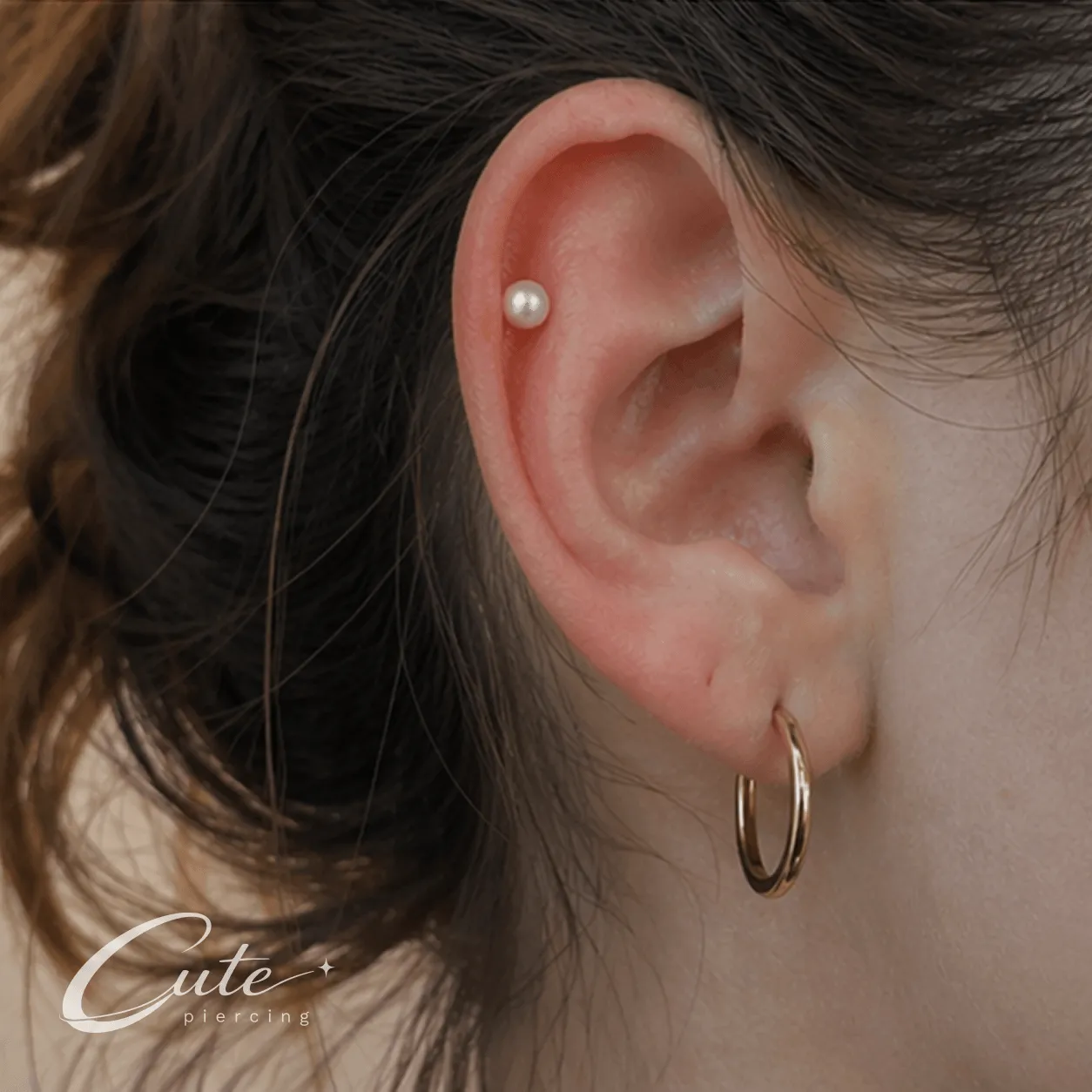
The helix is the upper outer rim of the ear. It’s the most popular cartilage piercing location — and for good reason.
Why helix?
- Visible and striking with any hairstyle
- Pairs beautifully with lobe earrings (perfect for ear curation)
- You can do multiple helix piercings stacked — creating a whole composition
- Suitable for most ear anatomies
How does healing look? Helix heals in 3 to 6 months. In the first weeks it may be sensitive to touch and pressure — especially during sleep. It’s best to sleep on the opposite ear or use a travel pillow with a hole.
Who is it for? For anyone who wants a classic, tried-and-tested look. A great choice for a first cartilage piercing.
Conch — bold, deep, unexpected
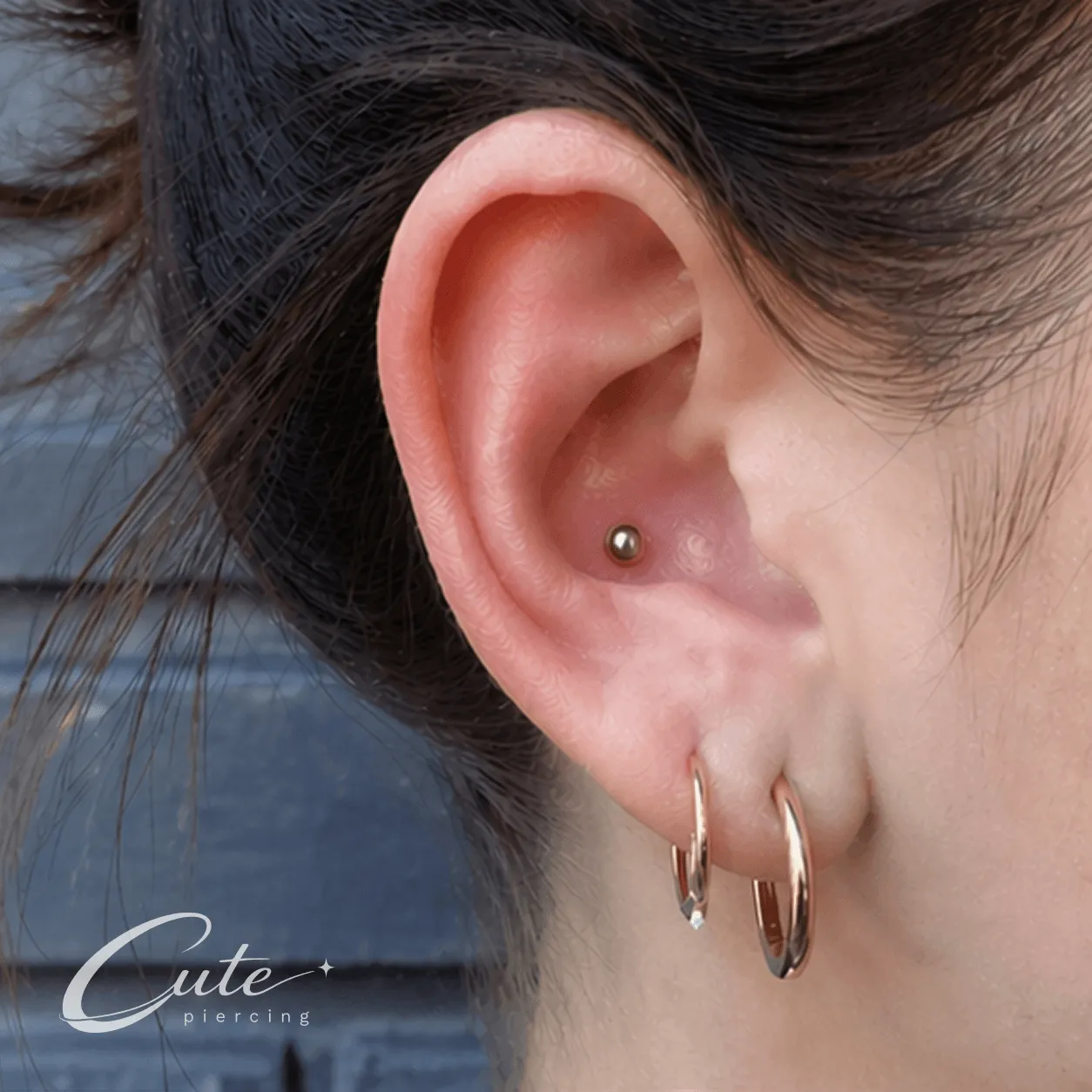
The conch is the central part of the ear — that large, concave surface in the middle of the ear. The name comes from the seashell it resembles in shape.
Why conch?
- Very striking and unexpected — not everyone has one
- Looks great with both a stud and a hoop
- Less prone to accidental snagging than helix
- Plenty of room for jewellery — you can choose a larger earring
How does healing look? Conch heals in 4 to 6 months. Due to its deeper position, it requires extra attention when cleaning.
Who is it for? For those who want to stand out with something more original. A conch piercing makes an impression even on its own.
Flat — the least known, yet one of the most beautiful
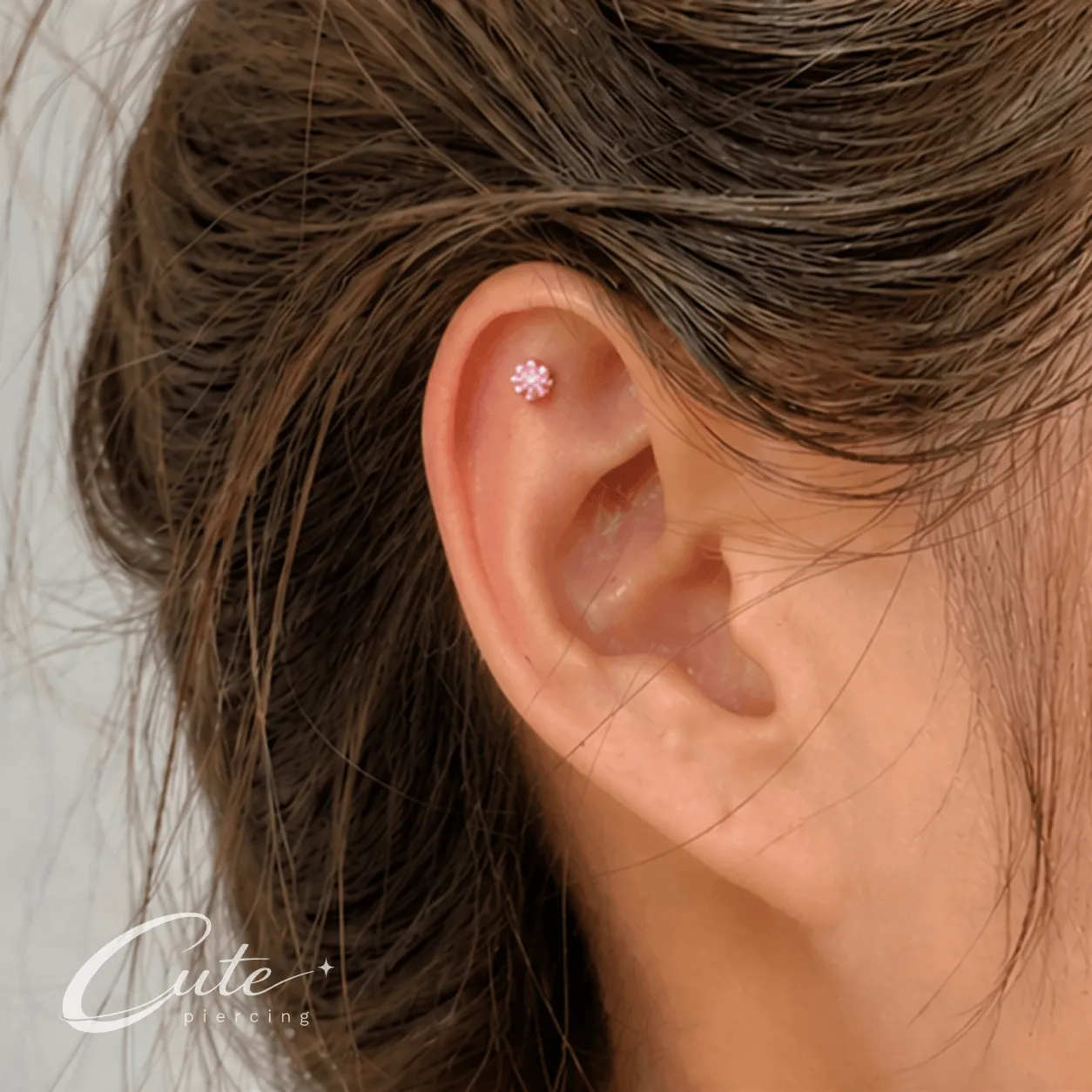
Flat is a relatively new and still lesser-known type of cartilage piercing. It’s placed on the flat surface of the ear — the area between the helix and conch known as the scapha.
Why flat?
- Subtle and elegant — doesn’t stand out like a helix
- Perfect spot for delicate flat studs with crystals
- Creates a unique effect in ear curations — fills the space between other piercings
- Not very common in Poland — you’ll stand out
How does healing look? Flat heals similarly to helix — 3 to 6 months. It’s important that the jewellery is genuinely flat.
Who is it for? For those passionate about aesthetics and ear curation. Flat is for those who already have several piercings and are looking for something subtle to complete the composition.
Tragus — small, discreet, very on-trend
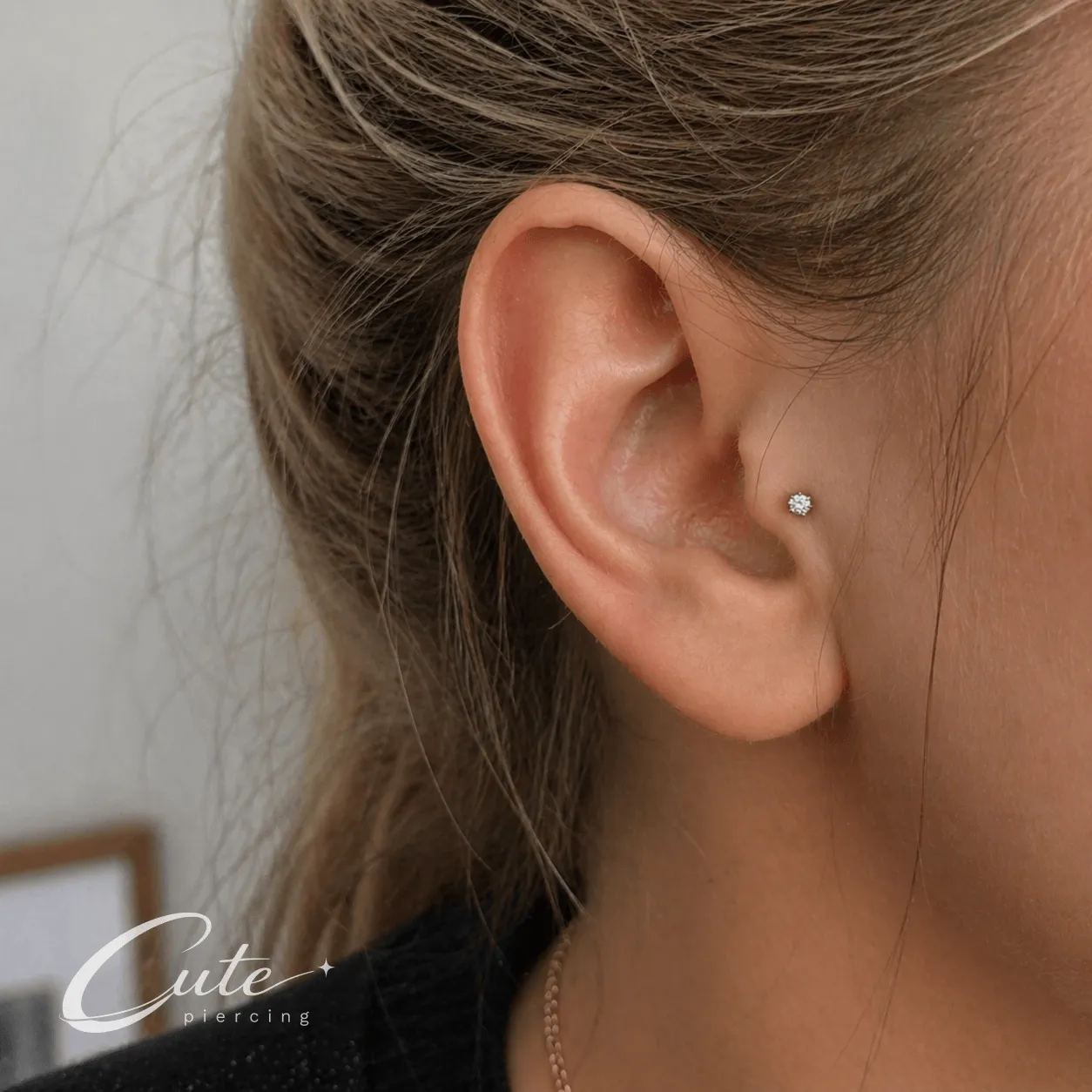
The tragus is the small triangular cartilage that partially covers the entrance to the ear canal. Despite its small size, it’s one of the most recognisable cartilage piercing locations.
Why tragus?
- Very discreet — only visible up close or from the side
- Perfect for those who want a subtle effect
- Looks great with small hoops or delicate studs
- Can be your only cartilage piercing — it looks complete on its own
How does healing look? Tragus heals in 3 to 6 months. Be careful with in-ear headphones during the healing period.
Who is it for? For those who appreciate discretion and minimalism.
Comparison — helix, conch, flat, tragus at a glance
| Helix | Conch | Flat | Tragus | |
|---|---|---|---|---|
| Visibility | High | High | Medium | Low |
| Healing time | 3–6 mo. | 4–6 mo. | 3–6 mo. | 3–6 mo. |
| Pain during procedure | Minimal | Minimal | Minimal | Minimal |
| Snagging risk | Medium | Low | Low | Low |
| Care difficulty | Easy | Medium | Easy | Easy |
| Solo effect | ✓ Yes | ✓ Yes | ✗ Better with others | ✓ Yes |
| In a composition | ✓✓ Ideal | ✓ Good | ✓✓ Ideal | ✓ Good |
All procedures performed with the Inverness Med system — from 90 PLN
Why the piercing method matters — especially for cartilage
Cartilage is tissue that doesn’t forgive mistakes during piercing. An incorrect method can lead to:
- prolonged healing
- keloids
- infections that are difficult to treat
- cartilage deformation
At Cute Piercing we use exclusively the Inverness Med system — certified by the FDA as a Class I Medical Device.
Safety Back™ — the patented clasp doesn’t compress the tissue and leaves space for airflow. This is critical for cartilage with its limited blood supply.
Single-use sterile cassettes — the earring and clasp are enclosed in a sterile capsule until the moment of piercing. Zero contact with potential contaminants beforehand.
Quiet, smooth mechanism — unlike guns that shoot and tear tissue, Inverness Med operates with smooth, hand-applied pressure. The cartilage is pierced precisely, without unnecessary tissue trauma.
Frequently asked questions about cartilage piercing
Does cartilage piercing hurt more than a lobe piercing?
With the Inverness Med system, most clients describe the procedure as practically painless — whether helix, conch, flat or tragus. The brief discomfort lasts literally a second.
How much does cartilage piercing cost at Cute Piercing?
Cartilage piercing (helix, conch, flat, tragus) costs from 90 PLN. The price doesn’t include earrings — hypoallergenic titanium or niobium earrings are available from 70 PLN each or from 120 PLN per pair.
How long does cartilage piercing take to heal?
Average healing time is 3–6 months. Full healing — when you can freely change jewellery — takes about a year.
Can I have multiple cartilage piercings at the same time?
Yes, but we recommend no more than two new piercings at once. Each piercing requires attention and aftercare.
Which location would you recommend for a first cartilage piercing?
We most often recommend helix — classic, very striking and well-tolerated by most ear anatomies. Tragus is a great option for those who prefer something more discreet.
Still not sure? Come in for a consultation
Every ear is different. What looks beautiful in a photo isn’t always possible or advisable for a specific anatomy. That’s why at Cute Piercing we discuss your expectations before every procedure, look at your ear and choose the best location together.
Book online — appointments available at our studio at Jana Kazimierza 49/u11 in Warsaw and with home visits.

